


The first time someone looks through a thermal device, it usually triggers the same reaction. “Wait, I can see that living thing even though it’s dark.”
That is the appeal of a thermal monocular. It does not depend on visible light the way night vision does. It detects heat differences and turns them into an image you can interpret.
But buying one can get confusing fast. You start seeing words like resolution, NETD, refresh rate, detection range, and suddenly you are wondering whether you need something basic or something serious.
At Horizon Optix, people usually ask for thermal gear for one of three reasons: spotting animals during hunting, checking property at night, or having a reliable way to detect movement when the lighting is poor. The best option depends on what you actually need to do with it, not what looks impressive in a product title.
Thermal Vision vs Night Vision: The Simplest Comparison
Let’s clear up the most important point first.
Thermal vision detects heat.
It works in complete darkness. It can pick up warm bodies even when there is no ambient light.
Night vision amplifies available light.
It works best when there is some light, like moonlight, or when using infrared assistance.
Here is the easiest way to decide which one fits you.
Choose thermal if you want detection.
Choose night vision if you want detail and recognition.
Thermal helps you spot something. Night vision can help you identify what it is.
Many outdoor users choose thermal for scanning and then switch to regular optics or a night vision monocular if they need clearer visual detail.
What a Thermal Monocular Is Best At
A thermal monocular is designed for handheld scanning and detection. That makes it extremely useful for situations where you want answers fast.
Common use cases include
Spotting animals in fields or woods during low light
Locating movement around a property at night
Finding a pet or livestock in darkness
Scanning a large area quickly without a spotlight
Thermal is especially strong when objects are partially hidden. You might not see an animal clearly with standard optics, but thermal can show the heat signature.
This is why many people who do hunting at dawn, dusk, or night end up looking into thermal sooner than they expected.
Understanding Thermal Images Without Overthinking It
Thermal images are not photographs. They are heat maps.
Warmer objects often appear brighter. Cooler objects appear darker. Depending on the device, you can switch color palettes, like white hot, black hot, or other styles.
The goal is not to admire the view. The goal is to interpret heat differences.
On a cold night, animals can stand out clearly. On a hot day, the contrast can be lower because the ground and surroundings hold heat too. Good thermal devices handle these changes better, but conditions always matter.
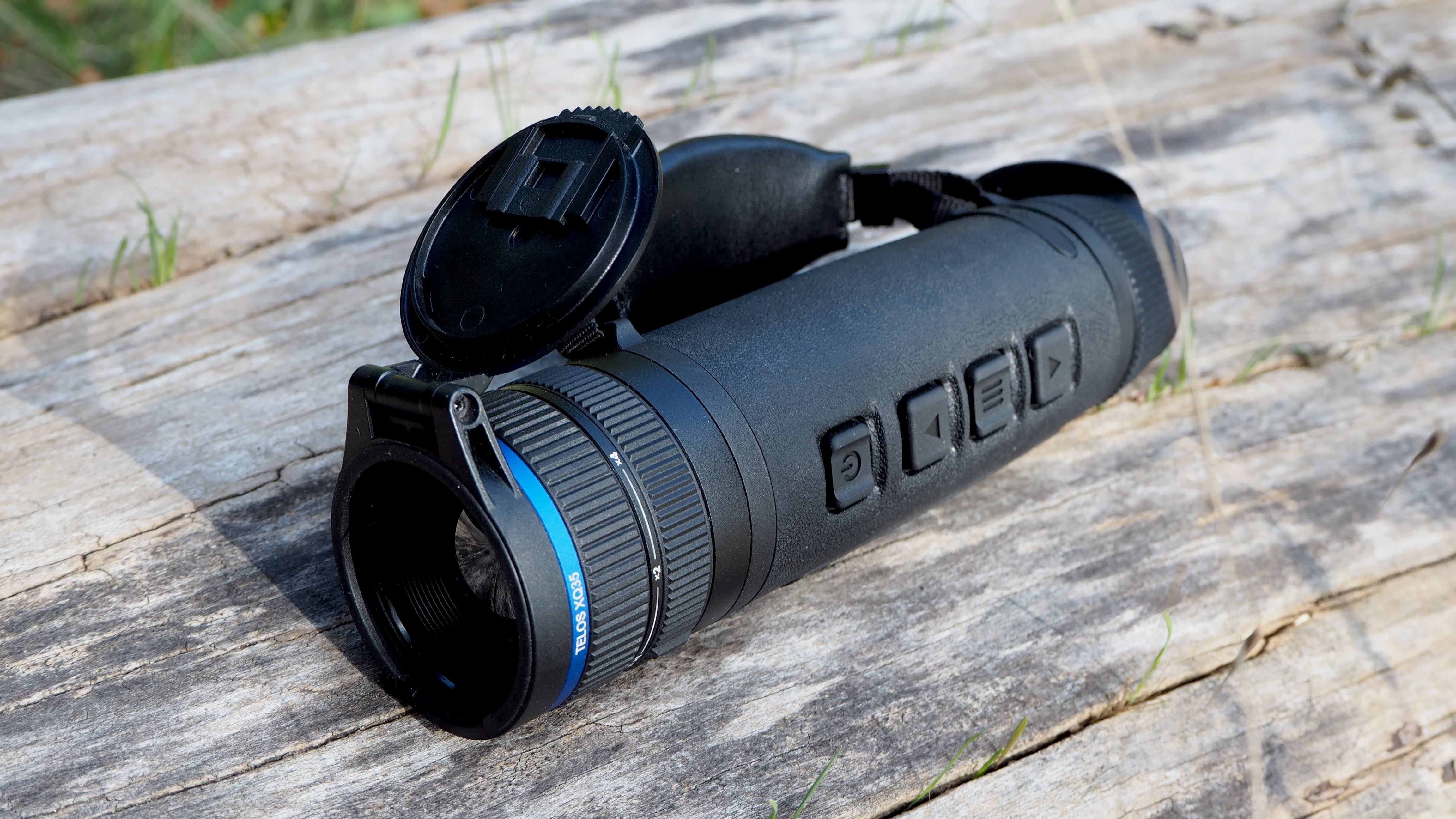
The Specs That Actually Matter When Buying Thermal
Thermal marketing can be noisy. These are the specs that truly change performance.
Sensor Resolution
Higher resolution generally means a clearer image and better ability to identify shapes. Lower resolution can still detect heat, but details may look blocky.
If you want to scan wide areas and still understand what you are seeing, resolution matters.
NETD and Sensitivity
NETD is essentially how sensitive the sensor is to tiny temperature differences. Lower NETD typically means better ability to show subtle detail, like an animal in brush or a person near a warmer surface.
You do not need to memorize the numbers. Just know that sensitivity matters for real world clarity, especially when contrast is not perfect.
Refresh Rate
Refresh rate affects how smooth movement looks when you pan or track. A low refresh rate can feel choppy. A higher refresh rate feels more natural, especially when scanning.
If you will use your thermal monocular while walking or scanning continuously, smoother refresh can be a big quality of life improvement.
Detection Range vs Recognition Range
Many brands advertise long detection range, meaning you can see a heat source exists at distance. Recognition is different. Recognition means you can tell what it is.
A device might detect something far away but not help you confidently identify whether it is a deer, a person, or another heat source.
If you want thermal for hunting, recognition matters more than detection marketing.
Lens Size
Lens size affects how much thermal energy the device collects and also affects field of view.
A wider field of view is easier for scanning
A narrower field of view can help for longer distance focusing
This becomes a personal decision. Do you want to scan wide areas or focus on longer distance detail.
Thermal Monocular vs Thermal Binoculars
Some people consider thermal binoculars because two eyed viewing feels more comfortable.
Thermal binoculars can be great for long observation sessions and comfort, but they are usually larger and more expensive.
A thermal monocular is often the practical first step because it is compact, easier to carry, and still very effective for scanning and detection.
For most people, a monocular is the entry point. If they later want more comfort and extended use, they upgrade to binocular style.
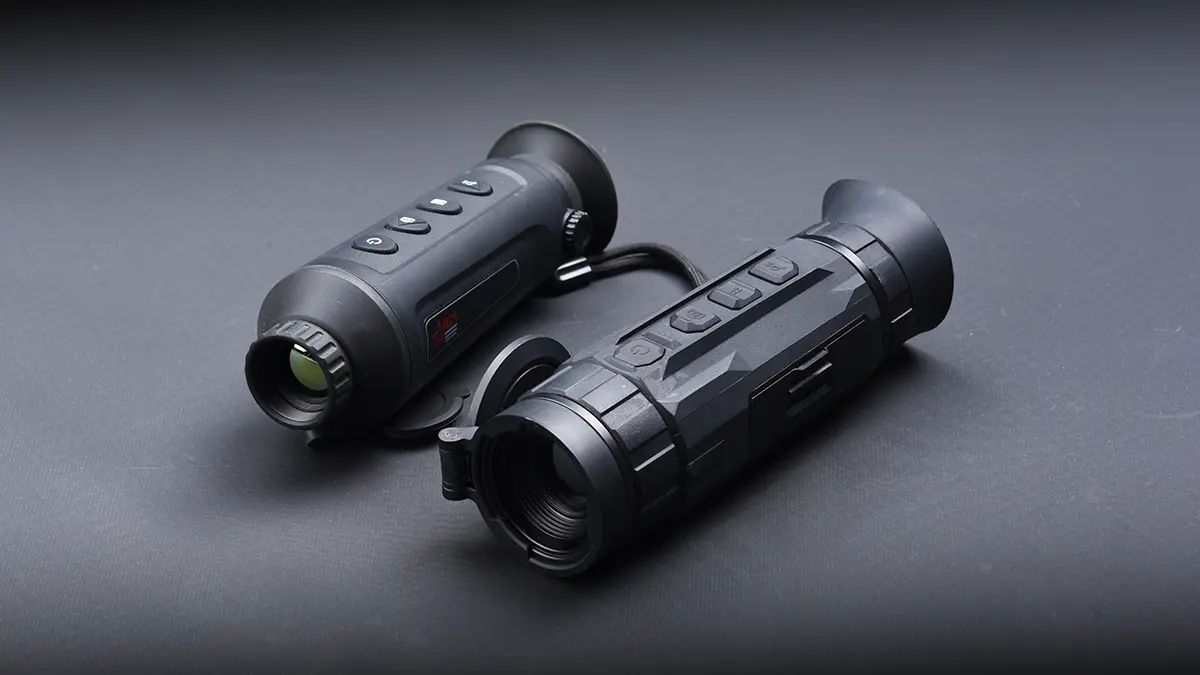
How to Choose Based on Your Real Use Case
Here is the practical way to decide without stress.
If You Want Thermal for Hunting
Prioritize
Recognition clarity
Smooth movement
A lens and field of view that match your environment
If you hunt in dense areas, you may prefer a wider view for scanning. If you hunt in open fields, longer distance performance becomes more important.
Thermal is incredible for spotting animals, but it is not always enough for identification. Some users pair thermal detection with night vision or daylight optics to confirm details.
If You Want Thermal for Property and Security Checks
Prioritize
Ease of use
Wide field of view
Comfortable handheld design
Battery life that lasts through the night
You want something that helps you quickly answer “Is something there” without setting up extra gear. For property checks, simplicity often beats extreme range.
If You Want Thermal for Outdoor Night Use
Prioritize
Portability
Smooth scan experience
Battery options for travel
A compact monocular you actually carry is more useful than a powerful device that stays at home.
This is a common theme for Horizon Optix customers. Most people are happier choosing the device they will realistically use regularly.
Battery Life and Practical Handling
Thermal devices can consume power quickly, especially at higher refresh settings. Check battery type and how you plan to charge.
For frequent outdoor use, consider
Devices that support rechargeable options
Spare battery planning
Comfortable grip and control layout
Thermal is often used in cold weather too, and cold conditions can reduce battery performance. Planning for that makes a big difference.
Common Mistakes Buyers Make
Buying based on detection range alone
Choosing too narrow a field of view for scanning
Ignoring refresh rate and ending up with choppy viewing
Expecting thermal to look like a camera photo
Forgetting that identification can require additional optics
Thermal is amazing, but it is a tool with a specific strength. The more you buy with realistic expectations, the happier you will be.
Horizon Optix tends to guide buyers away from hype and toward practical performance, especially for first time thermal buyers who want something reliable without overspending.
Final Thoughts
A thermal monocular is one of the most useful night tools you can own if your goal is detection. It works when light fails, it spots heat sources fast, and it changes how you see the outdoors after dark.
Choose thermal if you want to spot animals or movement quickly. Choose night vision if you want more visual detail. And if your main focus is hunting, choose based on recognition, not just advertised range.

